Get expert support for analysing well-being surveys, psychological scales, and intervention outcomes. Fast, accurate, and publication-ready results for your thesis or research.
At OnlineSPSS.com, we provide expert statistical consulting and data analysis services tailored for well-being research. Our mission is to simplify complex statistical tasks, so you can focus on what truly matters—understanding and improving psychological and emotional well-being through your research. Whether you’re measuring life satisfaction, evaluating mental health interventions, or analysing survey-based well-being scores, our team delivers accurate, timely, and publication-ready results.
Who We Help: PhD Students, Psychology Researchers, Health and Education Academics Project Types: Well-Being Dissertations, Psychology Theses, Intervention Evaluations, Academic Studies, Mixed-Method Projects Our Services: Data Cleaning, Statistical Analysis, Methodology Support, Results Writing
Whether you’re working with IBM SPSS, R, Stata, NVivo, or other platforms, our statisticians are experienced in all tools required for Well-Being Research Data Analysis Help. From survey design to statistical interpretation, we’re with you at every step of your research journey.
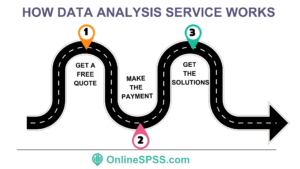
Click “Get Instant Quote” fill in required details, and upload supporting files.
2. Make the Payment
Pay securely through PayPal after receiving your custom quote.
3. Get Your Solutions
Receive high-quality, plagiarism-free results via email on time.
1. What is Well-Being Research?
Well-being research investigates how people experience and evaluate their lives. It involves emotional, psychological, and social dimensions of wellness. This field of study is commonly explored in psychology, public health, education, and social sciences. Researchers aim to understand what contributes to a person’s well-being, how it varies across populations, and how interventions can improve it. From happiness and life satisfaction to stress levels and personal fulfilment, well-being research covers a wide range of variables.
👉 Need Well-Being Research Data Analysis Help? Request a FREE Quoteand get statistician support from start to finish.
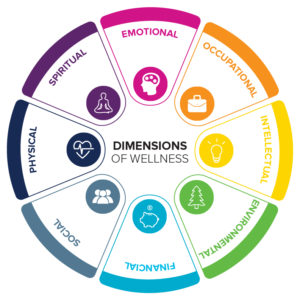
2. What are Dimensions of Well-Being?
Well-being is multidimensional and includes emotional, psychological, social, physical, and economic dimensions.
Emotional well-being: Involves feelings of happiness or anxiety.
Psychological well-being: Relates to self-acceptance, autonomy, and personal growth.
Social well-being: Reflects an individual’s sense of belonging and community involvement.
Physical well-being: Concerned with health status and physical capabilities.
Economic well-being: Focuses on financial stability and access to basic resources.
Dimensions of wellness
These dimensions provide a framework for assessing and understanding overall life quality.
In academic research, data is central to exploring the factors that influence well-being. Researchers collect data through surveys, experiments, or longitudinal designs to examine patterns and trends. Quantitative data helps compare well-being across groups, assess the impact of specific variables, and evaluate the effectiveness of interventions. Statistical analysis enables the transformation of raw numbers into meaningful evidence that informs policy decisions and academic discourse.
What are Data Collection Methods in Well-Being Studies?
Researchers collect well-being data through various methods depending on the goals of the study. Self-report questionnaires are the most common due to their scalability. Interviews and focus groups allow deeper insight into personal experiences. Online surveys offer wide reach, while wearable devices provide objective measures of physical health.
Self-report questionnaires are the most common due to their scalability.
Interviews and focus groups provide deeper insights into personal experiences.
Online surveys allow researchers to reach a broader audience.
Wearable devices offer objective data related to physical activity and health status.
Elevate Your Project with Expert Help
Each method provides valuable data, whether the focus is on mental health, physical activity, or life satisfaction.
👉 Need Well-Being Research Data Analysis Help? Request a FREE Quoteand get statistician support from start to finish.
What are Statistical Analysis Methods for Well-Being Research?
Several statistical methods are commonly used in analyzing well-being data:
Descriptive statistics: Mean, median, mode, and standard deviation
Inferential tests: T-tests, ANOVA for group comparisons
Correlation and regression: To explore relationships between variables
Structural Equation Modeling (SEM): To test complex relationships
Factor analysis: For scale development and validation
Multilevel modeling: To handle nested or longitudinal data
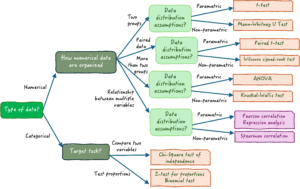
Decision Tree Diagram for Choosing a Statistical Test For Well-Being Research Data Analysis Help
These methods support evidence-based conclusions and recommendations.
How Do You Measure Well-Being in Quantitative Research?
Well-being is measured using validated scales designed to capture subjective life satisfaction and emotional states.
WHO-5 Well-Being Index: A short, five-item measure that evaluates current mental well-being over the past two weeks.
Satisfaction with Life Scale (SWLS): Assesses overall life satisfaction using five statements rated on a 7-point scale.
Positive and Negative Affect Schedule (PANAS): Measures both positive and negative emotional states through a list of descriptive adjectives.
Ryff’s Psychological Well-Being Scales: Evaluates six key aspects of psychological well-being, including autonomy, purpose in life, and personal growth.
PERMA-Profiler: Based on Seligman’s model, it measures five pillars of well-being—Positive emotion, Engagement, Relationships, Meaning, and Accomplishment.
These instruments provide reliable scores that can be statistically analyzed to draw conclusions across diverse populations and interventions.
Qualitative data allows researchers to explore well-being in a more nuanced and personal way. Through interviews, open-ended survey questions, and focus groups, researchers gather rich narratives. These responses are then analyzed using thematic or content analysis. Qualitative approaches help uncover cultural, social, and emotional nuances that may be missed in purely numerical data, offering a comprehensive understanding of well-being.
How to Analyze Well-Being Research?
Analyzing well-being research begins with data cleaning and checking for accuracy. Descriptive statistics help summarize the data. For reliability, tests like Cronbach’s alpha are used to assess internal consistency of scales. Inferential analyses such as ANOVA, correlation, and regression test relationships and differences. For qualitative research, coding frameworks help identify patterns. The use of graphs and tables enhances the clarity of the final results.
IBM SPSS: Best for basic and advanced statistical procedures
R and RStudio: Flexible and powerful for custom analyses
NVivo: Essential for qualitative coding and theme analysis
AMOS/Mplus: Ideal for SEM and latent variable modeling
JASP/Jamovi: User-friendly tools perfect for beginners
Statistical Software for Data Analysis in Well Being Research
OnlineSPSS.com provides expert support for all these platforms.
👉 Need Well-Being Research Data Analysis Help? Request a FREE Quoteand get statistician support from start to finish.
What is Well-Being Research Data Analysis Help?
Well-Being Research Data Analysis Help refers to professional support offered to students, researchers, and academics working on well-being topics. This service includes everything from data preparation to statistical testing and results interpretation.
Statistical Consulting for Well Being Studies
At OnlineSPSS.com, our experts assist in transforming your raw data into publishable results, tailored to your research objectives.
At OnlineSPSS.com, we offer comprehensive data analysis services specifically designed for well-being research. Our support includes assistance with statistical test selection, qualitative data coding, APA-style reporting, and visualizations. Whether you are conducting a university study or preparing a journal article, we help ensure your analysis meets academic standards.
Effortless Data Analysis Help for Academic Research
Statistical Analysis Help for Well-Being Dissertation
A well-being dissertation often involves complex data, multiple scales, and precise interpretations. OnlineSPSS.com helps you manage this workload by offering end-to-end dissertation support. We help you test hypotheses, ensure assumption checks, and write APA-compliant results. From scale reliability to regression models, we handle it all so you can focus on writing a strong discussion.
Example for Well-Being Dissertation
A psychology student explored the impact of physical activity on psychological well-being among college students.
The Impact of Physical Activity on Psychological Well-Being Among College Students
Used SWLS, PANAS, and Ryff scales. Data analyzed with SPSS using ANOVA and multiple regression. Support included data cleaning, testing assumptions, and interpretation.
Exploring the Relationship Between Work-Life Balance and Emotional Well-Being in Healthcare Workers
Included PANAS and WHO-5 scales. Analysis performed with SPSS, including correlation and hierarchical regression.
Social Media Usage and Its Effect on Adolescent Life Satisfaction
Used PERMA-Profiler and SWLS. Applied independent samples t-test and linear regression to assess group differences and predictive effects.
The Role of Financial Stress on Graduate Student Well-Being
Measured with Ryff Scales and self-developed economic stress inventory. Analysis involved descriptive stats, ANOVA, and factor analysis.
Each of these examples was supported by our team at OnlineSPSS.com, ensuring that data preparation, statistical testing, and APA-style reporting met academic standards.
Psychology theses often require detailed justification for every analytic choice. We help you choose the right scales, run appropriate tests, and explain the outcomes clearly. Whether you’re conducting a cross-sectional survey or a longitudinal intervention study, OnlineSPSS.com ensures your data analysis supports your thesis goals and meets academic expectations.
Get expert Well-Being Research Data Analysis Help today and elevate your academic research with clarity, precision, and professional guidance.
👉 Need Well-Being Research Data Analysis Help? Request a FREE Quoteand get statistician support from start to finish.
Need Help with Data Analysis?
Expert Statistical Data Analysis and Writing Services Tailored for Academic Research.
Get Accurate Insights, Reliable Results, and Professional Guidance.