Expert support for data analysing, interpreting, and reporting outcome-based research. Get help with data, methods, and results—accurate, fast, and tailored to your project.
At OnlineSPSS.com, we offer expert statistical support and data analysis for all types of research design. We assist with cross-sectional studies, cohort studies (prospective or retrospective), randomized controlled trials, longitudinal designs, experiments, qualitative research, and mixed methods, delivering accurate, clear, and ready-to-submit results.
Who We Help: PhD Students, Researchers, Academic Staff Project Types:Dissertations, Academic Papers, Assignments, Research Projects, DNP Projects Our Services: Study Design, Data Management, Statistical Analysis, Writing Methodology, Reporting Results
Whether you work with IBM SPSS, R, Stata, NVivo, MAXQDA, Ms Excel or another software, our statisticians are experienced in all tools required for your Academic Research. From designing your study to interpreting final results, we’re with you every step of the way.
Click “Get Instant Quote” fill in required details, and upload supporting files.
2. Make the Payment
Pay securely through PayPal after receiving your custom quote.
3. Get Your Solutions
Receive high-quality, plagiarism-free results via email on time.
Introduction
Understanding the right study design helps researchers collect accurate data, answer important questions, and produce valid results. Each design—whether observational or experimental—offers specific strengths, challenges, and uses. By choosing the correct method and applying it properly, you can improve the quality of your research and support strong, evidence-based conclusions. If you need help with selecting a design, analysing data, or reporting results, our team is ready to assist you.
In this guide, you will learn everything you need to know about the nested case-control study design, including how it works, when to use it, and how it compares to traditional case-control and cohort studies. We explain each part of the study process—from selecting the sample to analysing the data—so that you can confidently apply this method in your dissertation, academic research, or health study. This content is especially useful for students and professionals working with epidemiological, clinical, or longitudinal data.
👉 Get a Free Quote Today and simplify your nested case-control studyresearch with expert statistical help.
What is a Nested Case-Control Study in Research?
A nested case-control study is a type of case-control study conducted within an existing cohort study. In this design, researchers identify cases (participants who develop the outcome of interest) and controls (participants who do not) from within the cohort. Both cases and controls come from the same well-defined population, improving internal validity and data quality.
Nested Case-Control Study
Unlike traditional case-control studies, which select participants separately from the general population, the nested case-control approach benefits from already-collected cohort data. This makes the study cost-effective, efficient, and less prone to selection bias. It is commonly used in medical and epidemiological research when collecting exposure data for an entire cohort would be too expensive or time-consuming.
👉 Get a Free Quote Today and simplify your case-control studyresearch with expert statistical help.
What is the Key Feature of a Nested Case-Control Study?
The defining feature of a nested case-control study is that the cases and controls are drawn from an existing longitudinal cohort that is already being followed over time. Cases are selected when they develop the outcome, and controls are selected from those who are still at risk at that time.
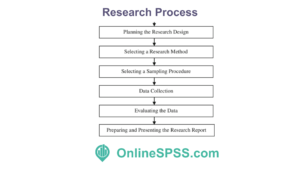
Research Process
Because exposure data often exists prior to outcome development, this method preserves the temporal sequence between exposure and outcome. It also ensures that both cases and controls are drawn from the same population base, reducing confounding and recall bias.
Key features:
Conducted within a defined cohort
Cases and controls are matched by time or other variables
Exposure data is collected before the outcome occurs
Reduces recall bias and selection bias
👉 Get a Free Quote Today and simplify your case-control studyresearch with expert statistical help.
Why Do We Use Nested Case-Control Studies?
Researchers use nested case-control studies when working with large cohorts but want to reduce cost and effort while maintaining high data quality. Instead of collecting exposure data for the entire cohort, researchers only collect it for selected cases and matched controls.
This approach is particularly useful in clinical or epidemiological studies where biological samples (like blood or genetic data) are stored and expensive to analyse. The design allows efficient use of resources while maintaining scientific rigour.
Reasons to choose:
Cost-effective alternative to full cohort analysis
Reduces data collection burden
Allows analysis of rare outcomes
Maintains temporal and methodological integrity
👉 Get a Free Quote Today and simplify your case-control studyresearch with expert statistical help.
What is an Example of a Nested Case-Control Study?
Imagine a cohort of 50,000 participants is followed for 10 years to study heart disease. At year eight, 300 individuals have developed heart disease—these become the cases. For each case, two controls are selected from cohort members who have not yet developed heart disease at that point.
Researchers then go back and examine stored blood samples collected at the start of the study to assess cholesterol levels. This design allows investigators to explore the relationship between early cholesterol levels and later development of heart disease without having to test all 50,000 participants.
Example structure:
Cohort: 50,000 participants
Cases: 300 participants who developed heart disease
Controls: 600 participants who remained disease-free (matched by age, sex, or time)
Exposure: Baseline cholesterol levels stored from cohort entry
👉 Get a Free Quote Today and simplify your nested case-control studyresearch with expert statistical help.
Pros and Cons of Nested Case-Control Study
The nested case-control design offers several advantages over traditional case-control or full cohort studies. It improves efficiency while preserving the strengths of cohort data. However, it also has limitations that must be carefully considered during planning and analysis.
Pros:
Efficient and cost-saving – fewer participants required for analysis
Minimises recall bias – need to collect data before outcome occurs
Reduces selection bias – controls come from the same cohort
Strong internal validity – same population base for both groups
Cons:
Cannot estimate overall incidence or risk in the full cohort
Matching may limit analysis of certain variables
Requires a well-defined and established cohort study
👉 Get a Free Quote Today and simplify your case-control studyresearch with expert statistical help.
Are Nested Case-Control Studies Biased?
Nested case-control studies reduce many common biases found in traditional case-control designs. Researchers select both cases and controls from the same well-defined cohort, which strengthens internal validity and limits selection bias. This method ensures that both groups come from the same population and follow the same inclusion criteria.
However, some forms of bias can still affect the results. Information bias may occur if exposure data lacks consistency or accuracy, especially when researchers rely on older records or biological samples. Confounding remains a concern too. If researchers fail to match or adjust for key variables such as age, sex, or socioeconomic status, the results may misrepresent the true association.
Common bias risks:
Information bias arises when exposure data lacks precision
Confounding occurs if key variables remain uncontrolled
Recall bias is rare due to pre-recorded data, but still possible if records are incomplete
To reduce bias, researchers must define selection criteria clearly, choose reliable data sources, and apply proper statistical adjustments during analysis.
How to Collect Data for a Nested Case-Control Study?
Data collection in a nested case-control study begins with an existing cohort that has baseline data or stored biological samples. Researchers identify cases as they occur and select matched controls who are at risk at the time the case occurs.
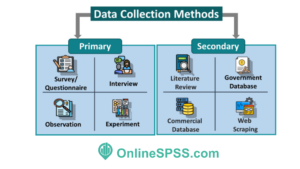
Data Collection Methods
Exposure data may already exist or may be retrieved from biological samples, records, or questionnaires. It is important to ensure consistent measurement of exposures across both groups.
Data collection steps:
Start with a defined cohort
Identify cases as outcomes develop
Select controls matched by time or demographics
Retrieve baseline exposure data or biological samples
👉 Get a Free Quote Today and simplify your case-control studyresearch with expert statistical help.
What is the Data Analysis of a Nested Case-Control Study?
Data analysis in a nested case-control study often mirrors traditional case-control analysis. Researchers use odds ratios to assess the strength of association between exposure and outcome, typically through logistic regression.
However, because the study is embedded in a cohort, researchers can use risk set sampling—matching controls to the time when each case occurs. This method enhances temporal precision and provides a more accurate estimation of associations.
Typical analysis:
Odds ratio calculation – main outcome measure
Conditional logistic regression – used when controls are matched to cases
Adjust for confounding variables (e.g. age, sex, lifestyle factors)
👉 Get a Free Quote Today and simplify your case-control studyresearch with expert statistical help.
What Statistical Tests are Used in Nested Case-Control Studies?
The main statistical tool in nested case-control studies is conditional logistic regression, which accounts for the matching of cases and controls. If controls are not tightly matched, researchers may use standard logistic regression instead.
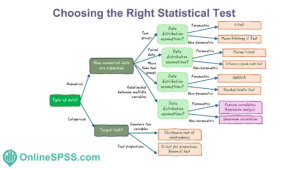
Choosing the Right Statistical Test
The odds ratio remains the central measure, supported by confidence intervals and p-values to assess significance. Advanced analysis may also adjust for covariates like socioeconomic status or lifestyle factors.
Common tests:
Conditional logistic regression – when matched controls are used
Standard logistic regression – if no formal matching is applied
Odds ratio (OR) – primary estimate of association
Chi-square or Fisher’s test – for categorical data comparisons
👉 Get a Free Quote Today and simplify your case-control studyresearch with expert statistical help.
How Do You Analyse Data in a Nested Case-Control Study?
To analyse data in a case-control study, researchers prepare the dataset with clearly labelled cases and controls. Matching variables must be carefully documented to ensure proper model specification.
We use conditional logistic regression to analyse the matched data, allowing researchers to estimate the odds of outcome development based on exposure. So, We interpret the results with attention to matching factors, sample size, and statistical power.
Steps to follow:
Prepare and clean data from the cohort
Label and match cases and controls
Apply conditional logistic regression
Adjust for confounders
Report ORs, confidence intervals, and statistical significance
👉 Get a Free Quote Today and simplify your case-control studyresearch with expert statistical help.
Statistical Data Analysis Help for Nested Case-Control Study
At OnlineSPSS.com, we provide expert support for researchers working with case-control study designs. Whether you need help with cohort matching, conditional logistic regression, or writing your results, we’re here to help from start to finish.
Our experts provide guidance on statistical tests, interpretation of complex data, and presentation of results in clear, publication-ready formats. We work closely with you to meet your specific research needs and ensure that your study’s outcomes are reliable and well-presented.
Our services include:
Study design consultation and review.
Data coding and cleaning tailored for case-control study data.
Advanced statistical analysis using appropriate software.
Clear interpretation and guidance on reporting results.
Support in creating visualisations and APA-style reports.
👉 Get a Free Quote Today and simplify your case-control studyresearch with expert statistical help.
📺 Visit our YouTube Channel for SPSS and qualitative data tutorials, tips, and academic writing guidance.
✅ Follow us on LinkedIn for useful Statistical Content.
Need Help with Data Analysis?
Expert Statistical Data Analysis and Writing Services Tailored for Academic Research.
Get Accurate Insights, Reliable Results, and Professional Guidance.