Expert support for analysing psychological data, mental health outcomes, and survey responses. Fast, accurate, and thesis-ready results for your academic or clinical research.
At OnlineSPSS.com, we offer expert statistical consulting and data analysis services tailored for mental health research. Our mission is to simplify complex statistical tasks, so you can focus on what truly matters—understanding psychological outcomes and making an impact through your research. Whether you’re analysing depression scores, evaluating intervention effectiveness, or conducting a survey on stress and anxiety, our team delivers accurate, timely, and publication-ready results.
Who We Help: PhD Students, Psychology Researchers, Clinical Academics Project Types: Mental Health Dissertations, Psychological Theses, Clinical Evaluations, Academic Studies, Mixed-Methods Research Our Services: Data Cleaning, Statistical Analysis, Methodology Writing, Reporting Mental Health Results
Whether you’re working with IBM SPSS, R, Stata, NVivo, or other software, our statisticians are experienced in all tools required for Mental Health Research Statistical Analysis Help. From structuring your dataset to interpreting psychological scales, we support you at every stage of your project.
👉 Get a FREE Quote today for data analysis in your psychology or mental health research.
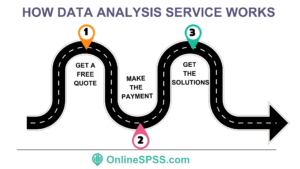
How Statistics Service Works
1. Submit Your Task
Click “Get Instant Quote” fill in required details, and upload supporting files.
2. Make the Payment
Pay securely through PayPal after receiving your custom quote.
3. Get Your Solutions
Receive high-quality, plagiarism-free results via email on time.
1. What is Mental Health Research?
Mental health research explores emotional, psychological, and behavioural well-being across different populations. It focuses on understanding the causes, symptoms, prevention, and treatment of mental health conditions such as depression, anxiety, bipolar disorder, schizophrenia, and stress-related disorders. The field plays a vital role in public health, clinical psychology, psychiatry, education, and workplace studies.
Help with Statistical Methods for Mental Health Research.
Researchers aim to improve mental health services, develop evidence-based interventions, and understand social, biological, and psychological risk factors. From small qualitative interviews to large-scale surveys and clinical trials, mental health research relies on accurate data collection and robust statistical analysis to drive impactful conclusions.
With our mental health research statistical analysis help, you receive expert guidance tailored to your specific research design and academic level.
Currently, anxiety and depression remain the most prevalent mental health challenges worldwide. According to global health data, these conditions affect millions of people, cutting across all age groups and backgrounds. The COVID-19 pandemic has significantly amplified mental health struggles, particularly in adolescents, healthcare workers, and marginalised communities.
Other rising concerns include suicide, substance use disorders, and burnout, especially among young adults and professionals. Mental health research helps identify these trends, evaluate intervention effectiveness, and shape policies that promote resilience and access to care.
With our mental health research statistical analysis help, you receive expert guidance tailored to your specific research design and academic level.
Electronic Health Records (EHRs) from psychiatric clinics or hospitals
Mobile App or Diary-based Self-Monitoring
We assist researchers in choosing the right tools and preparing their data for analysis through our mental health research statistical analysis help service.
Analysing mental health research data requires a blend of quantitative accuracy and psychological understanding. Researchers begin by cleaning and preparing the data, checking for missing values, and exploring distributions. Next, appropriate tests are selected based on the variables and hypotheses.
For example, comparing anxiety levels between two groups may involve a t-test. Evaluating the impact of therapy across time requires repeated measures ANOVA or linear mixed models. We support you through each step—from dataset preparation to result interpretation—with personalised guidance.
Psychological analysis combines data with theory. First, you define the psychological constructs (e.g. self-esteem, depression). Then, you select validated scales and collect responses. Next, you apply statistical methods that reveal patterns, relationships, or differences based on your research aims.
We assist you with:
Scale scoring and validation
Data entry and cleaning
Hypothesis testing and model selection
Graphing and reporting in APA style
Whether it’s a psychological thesis or applied intervention study, our mental health research statistical analysis help ensures rigorous, theory-aligned analysis.
8. Why is Statistical Analysis Important for Mental Health Research?
Without statistical analysis, mental health research cannot move beyond observation. Analysis allows researchers to:
Test the effectiveness of treatments
Identify risk and protective factors
Compare demographic groups
Validate psychological scales
Establish correlations or causations
Publish credible, data-driven findings
Incorrect or incomplete analysis may lead to misleading results and poor clinical recommendations. Our expert statisticians ensure that your analysis is scientifically sound, ethically reported, and ready for academic submission.
Common measurement tools in mental health research include:
PHQ-9 (Patient Health Questionnaire – Depression)
GAD-7 (Generalised Anxiety Disorder Scale)
DASS-21 (Depression, Anxiety and Stress Scale)
BDI-II (Beck Depression Inventory)
WHO-5 (Well-Being Index)
CES-D (Center for Epidemiologic Studies Depression Scale)
K10/K6 (Kessler Psychological Distress Scales)
These tools provide reliable, valid scores used in both clinical and academic studies. At OnlineSPSS.com, we help you calculate scores, interpret cut-offs, and include these results in your final report.
10. What is Mental Health Research Statistical Analysis Help?
Mental Health Research Statistical Analysis Help is a specialised service offered by OnlineSPSS.com to assist students, researchers, and clinicians with the analysis of psychological and psychiatric data. It includes selecting appropriate tests, analysing data using software like SPSS or R, interpreting findings, and writing results that align with academic standards.
Expert Statistical Consulting For Mental Health Research
We offer one-to-one guidance, technical expertise, and confidentiality—ensuring your study is supported from start to finish.
What Statistical Software is Good in Psychology?
Psychology researchers use a variety of statistical tools:
IBM SPSS: Best for basic and advanced statistical procedures
R and RStudio: Flexible and powerful for custom analyses
NVivo: Essential for qualitative coding and theme analysis
AMOS/Mplus: Ideal for SEM and latent variable modeling
JASP/Jamovi: User-friendly tools perfect for beginners
11. Get Statistical Data Analysis Service for Your Mental Health Research
If you’re conducting a mental health research project—whether for a dissertation, academic paper, or clinical evaluation—you can rely on our support. We offer:
13. Data Analysis for Psychological Dissertation or Research
Writing a psychology dissertation can be overwhelming, especially when complex data analysis is involved. Whether your research is experimental, correlational, or longitudinal, we help with:
Methodology design
Data analysis (quantitative and qualitative)
APA-style result reporting
Statistical interpretation for discussion chapters
Revisions based on supervisor feedback
With our mental health research statistical analysis help, you receive expert guidance tailored to your specific research design and academic level.
Expert Statistical Data Analysis and Writing Services Tailored for Academic Research.
Get Accurate Insights, Reliable Results, and Professional Guidance.