Expert support for data analysing, interpreting, and reporting academic research. Get help with data analysis, methods, and writing results—accurate, fast, and tailored to your research study.
At OnlineSPSS.com, we offer expert statistical support and data analysis for all types of research design. We assist with cross-sectional studies, cohort studies (prospective or retrospective), randomized controlled trials, longitudinal designs, experiments, qualitative research, and mixed methods, delivering accurate, clear, and ready-to-submit results.
Who We Help: PhD Students, Researchers, Academic Staff Project Types:Dissertations, Academic Papers, Assignments, Research Projects, DNP Projects Our Services: Study Design, Data Management, Statistical Analysis, Writing Methodology, Reporting Results
Whether you work with IBM SPSS, R, Stata, NVivo, MAXQDA, Ms Excel or another software, our statisticians are experienced in all tools required for your Academic Research. From designing your study to interpreting final results, we’re with you every step of the way.
Click “Get Instant Quote” fill in required details, and upload supporting files.
2. Make the Payment
Pay securely through PayPal after receiving your custom quote.
3. Get Your Solutions
Receive high-quality, plagiarism-free results via email on time.
Introduction
In this comprehensive guide, you’ll discover what a longitudinal study is, how it works, and why researchers use it to track changes over time. We’ll explain the key features, benefits, and limitations of this research design, along with examples from academic studies. You’ll also learn how to collect and analyse longitudinal data, what statistical tests are used, and how to report your findings. Whether you’re working on a dissertation, thesis, or academic paper, this guide will help you understand and apply the longitudinal study design with confidence.
1. What is a Longitudinal Study in Research?
A longitudinal study is a research design that involves repeated observations of the same variables over an extended period. Researchers collect data from the same subjects at multiple time points. This design is useful to track changes and developments in behaviours, conditions, or opinions over time.
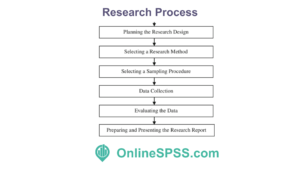
Research Process
This method is commonly used in social sciences, public health, and education to observe trends, measure long-term effects, and assess the evolution of phenomena. It allows researchers to study how and when changes occur, which provides deeper insights into the progression of the study variables.
Key points:
Data is collected repeatedly from the same subjects.
Suitable for examining trends and causal relationships.
Often involves long time periods (months, years, or decades).
Useful in fields that require understanding of change over time.
👉 Get a Free Quote Today and let our team support your longitudinal study research with expert guidance and clear results.
2. What is the Key Feature of a Longitudinal Study?
The key feature of a longitudinal study is its ability to collect data at multiple time points. This repeated measurement enables researchers to monitor changes and trends within the same group of participants. It distinguishes longitudinal studies from cross-sectional studies, which capture data only once.
Longitudinal Study Diagram
Because the same subjects are followed over time, researchers can determine temporal sequences and better understand cause-and-effect relationships. However, managing and retaining participants over long durations can be challenging, and the study requires careful planning to address potential dropouts.
Key features:
Involves repeated measurements over time.
Can establish temporal relationships.
Offers insight into developmental trends.
Requires robust planning to maintain sample integrity.
👉 Get a Free Quote Today and let our team support your longitudinal study research with expert guidance and clear results.
3. Why Do We Choose Longitudinal Studies?
Researchers opt for longitudinal studies when they need to track changes and establish a timeline for events. These studies help determine whether a particular exposure or intervention has a lasting impact on outcomes. They are especially valuable when studying developmental trends or the progression of diseases.
Statistical Data Analysis Services
Longitudinal studies are also chosen for their ability to reveal patterns that single-point studies might miss. For example, understanding how early life experiences affect later behaviour can only be achieved through following participants over a significant period. This design is ideal for detailed investigations that require time-sequenced data.
Reasons to choose:
Provides insights into causal relationships.
Tracks developmental changes and trends.
Supports evaluation of interventions over time.
Offers detailed data on the progression of conditions.
👉 Get a Free Quote Today and let our team support your longitudinal study research with expert guidance and clear results.
4. What is an Example of a Longitudinal Study?
Consider a study investigating the impact of early childhood education on academic performance. Researchers collect data from a group of children at the start of their schooling and follow them for several years, recording academic achievements, behavioural changes, and social skills along the way.
In this example, the same group of children is assessed periodically to observe how early educational experiences influence later academic and social outcomes. This type of study provides comprehensive insights into the long-term effects of education and can help inform policy decisions in the educational sector.
Example study setup:
Population: A group of children starting school.
Variables: Academic scores, behavioural assessments, and social skills.
Design: Data collection at multiple intervals over several years.
👉 Get a Free Quote Today and let our team support your longitudinal study research with expert guidance and clear results.
5. Pros and Cons of Longitudinal Study
Longitudinal studies offer significant advantages, especially for understanding long-term changes and establishing temporal sequences. They provide a robust framework for investigating cause-and-effect relationships and monitoring how variables evolve over time.
However, these studies also present challenges. They require considerable time and resources, and maintaining participant engagement over long periods can be difficult. Additionally, there is a risk of participant drop-out, which may affect the study’s outcomes and introduce bias.
Pros:
Enables analysis of causal relationships.
Tracks changes and trends over time.
Provides detailed data on developmental progress.
Can identify predictive factors for future outcomes.
Cons:
Time-consuming and resource-intensive.
High risk of participant drop-out.
Requires long-term commitment from researchers.
May be affected by external events over time.
👉 Get a Free Quote Today and let our team support your longitudinal study research with expert guidance and clear results.
6. How to Collect Data for a Longitudinal Study?
Data collection in a longitudinal study involves planning and executing repeated measurements from the same set of participants over time. Researchers design a schedule for data collection that could span months, years, or even decades. A clear plan is essential to ensure consistency across all time points.
Researchers use various methods to collect data, including surveys, interviews, observational checklists, and digital tools. It is crucial to maintain the same measurement instruments and protocols during each round of data collection to ensure that the data remains comparable and valid.
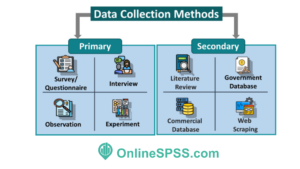
Data Collection Methods
Common methods include:
Structured surveys or questionnaires
Interviews (face-to-face or remote)
Observational techniques
Use of existing records or digital tracking tools
👉 Get a Free Quote Today and let our team support your longitudinal study research with expert guidance and clear results.
7. What is the Data Analysis of a Longitudinal Study?
Data analysis in a longitudinal study focuses on understanding trends, changes, and the impact of specific variables over time. Initially, researchers perform descriptive statistics for each time point to summarise the data. They then compare these results across different time intervals to detect trends and shifts.
More advanced statistical techniques, such as growth curve modelling and repeated measures analysis, are used to examine the data further. This approach helps determine the influence of time-varying factors and identify patterns that might not be apparent in a single snapshot.
The analysis steps include:
Descriptive statistics for each time point.
Comparative analysis across different intervals.
Advanced techniques like growth curve modelling.
Interpretation of trends and developmental changes.
8. What Statistical Tests are Used in Longitudinal Studies?
The statistical tests in a longitudinal study depend on the research questions and the type of data collected. Researchers often use tests that account for repeated measures and correlations among data points from the same subjects.
Common tests include repeated measures ANOVA, which compares means over time, and mixed-effects models, which account for both fixed and random effects. These tests help to control for within-subject variability and to interpret accurately the impact of time on the variables of interest.
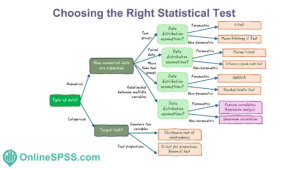
Choosing the Right Statistical Test
Common tests:
Repeated measures ANOVA – compares means across time.
Mixed-effects models – handle both fixed and random effects.
Growth curve analysis – tracks changes over time.
Correlation and regression tests – assess relationships between variables.
👉 Get a Free Quote Today and let our team support your longitudinal study research with expert guidance and clear results.
9. How Do You Analyze Data in a Longitudinal Study?
Analysing data in a longitudinal study involves several systematic steps. First, the data is cleaned and prepared by ensuring consistency across time points. Descriptive statistics are then calculated to understand the distribution of variables at each interval.
Next, the study employs repeated measures techniques to examine changes over time. Researchers often use multivariate analysis to adjust for confounding factors and identify significant trends. Clear visualisations, such as line graphs and bar charts, are also produced to illustrate the evolution of the data.
Steps to follow:
Prepare and clean the data for consistency.
Calculate descriptive statistics for each time interval.
Use repeated measures analysis to test changes over time.
Employ multivariate techniques to control for confounders.
Visualise the trends for clear interpretation.
10. Statistical Data Analysis Help for Longitudinal Study
If you are managing a longitudinal study for your research, thesis, or publication, expert statistical data analysis can greatly enhance your work. At OnlineSPSS.com, our experienced team supports you through every stage of your study. We help design your study, select the appropriate methods, and ensure your data analysis is robust and accurate.
Our experts provide tailored guidance on statistical tests, interpretation of complex data, and presentation of results in clear, publication-ready formats. We work closely with you to meet your specific research needs and ensure that your study’s outcomes are reliable and well-presented.
Our services include:
Study design consultation and review.
Data coding and cleaning tailored for longitudinal data.
Advanced statistical analysis using appropriate software.
Clear interpretation and guidance on reporting results.
Support in creating visualisations and APA-style reports.
If you need professional assistance with your longitudinal research, visit OnlineSPSS.com for a free quote and expert support.
👉 Get a Free Quote Today and let our team support your longitudinal study research with expert guidance and clear results.
📺 Visit our YouTube Channel for SPSS and qualitative data tutorials, tips, and academic writing guidance.
✅ Follow us on LinkedIn for useful Statistical Content.
Need Help with Data Analysis?
Expert Statistical Data Analysis and Writing Services Tailored for Academic Research.
Get Accurate Insights, Reliable Results, and Professional Guidance.